


Yeewi Association and five partner organizations publish an advocacy brief for the integration of menstrual health into public policies in Senegal.
In Senegal, 45% of schoolgirls miss school every month during their periods. 99% of public institutions lack separate toilets. Menstrual products are taxed at 18%, just like luxury goods. These figures are not mere anecdotes; they shine a light on the structural invisibilization of menstrual experiences.
A silence that comes at a high price
Menstruation remains a taboo subject in Senegal. Trapped between calls to “mougn” (endure), social norms, and invisibilization in the public sphere, menstruators grow up in silence. In fact, 83% of girls received no information about periods prior to their first menstruation, and 55% experience shame during their periods. This silence is not culturally inevitable; it is actively perpetuated by the absence of menstrual education in school curricula, the lack of training for healthcare workers, and the utter void of dedicated public policy. And this has a cost: on girls' education, on their agency, and on their health.
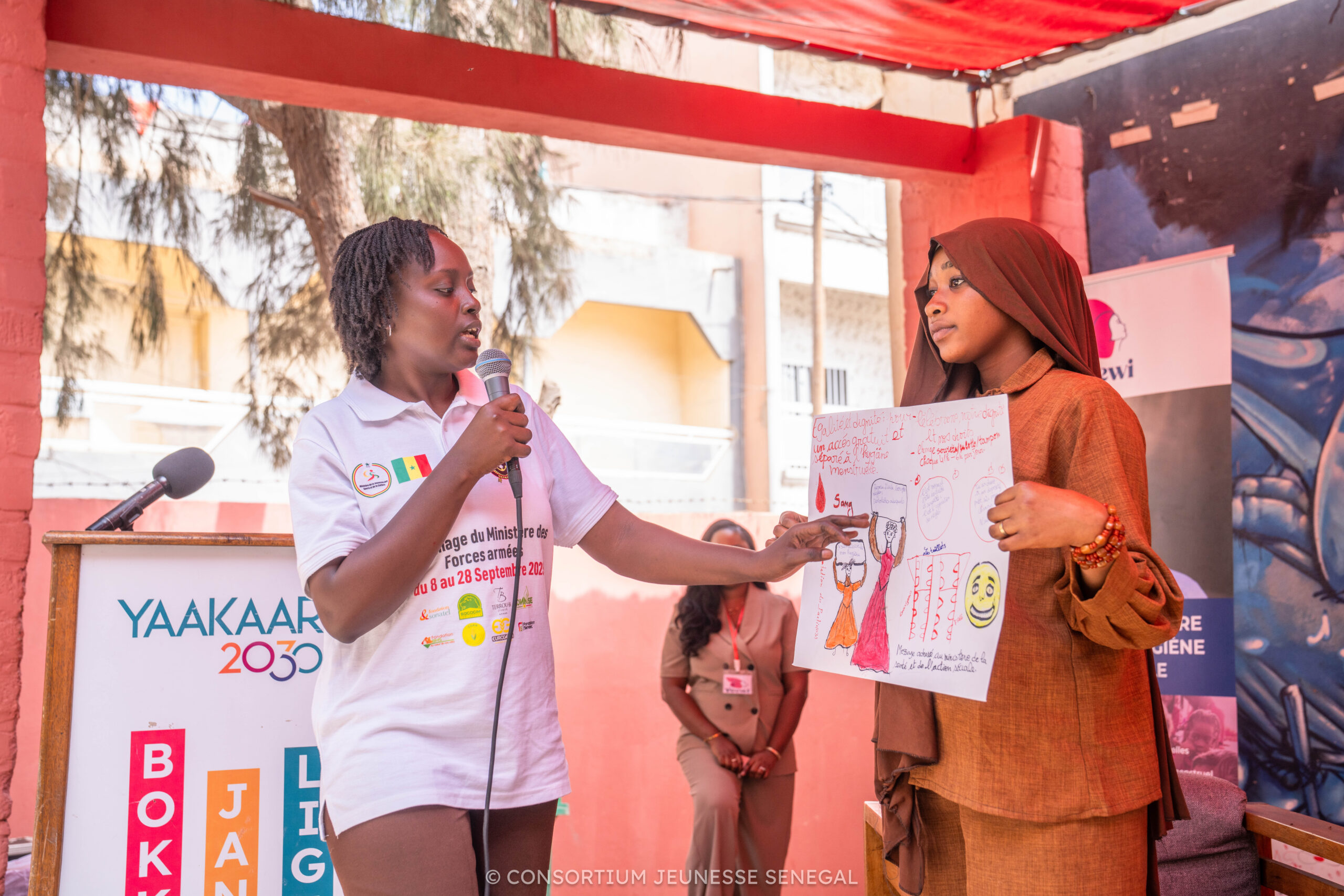
An advocacy brief, a collective act
To name what has been silenced and demand what is rightfully due, six Senegalese civil society organizations (ApiAfrique, AMFE, Consortium Jeunesse Sénégal, Kitambaa, Weerwi, and Yeewi Association) established the first advocacy committee specifically dedicated to menstrual health in Senegal. Together, they co-created and published an advocacy brief on the occasion of Menstrual Hygiene Day on May 28, 2026.
This brief is the fruit of a collective journey, built through working sessions, consultations, and the vital contributions of each committee member. It was designed so that every voice counts and every organization stands as a true co-author of the final document. Our goal: to lay the foundation for a collective, evolving advocacy—one meant to be joined and expanded by others to build a true movement.
Four demands required of the Senegalese State
The brief identifies four barriers that trap the menstrual experience in indignity (non-existent infrastructure, inaccessible period products, organized silence, lack of national policy) and puts forward concrete, actionable recommendations. With this framework established, requests for hearings have been submitted to our advocacy targets, accompanied by concrete actions:
A. Educate and inform
Integrate menstrual health into school curricula starting in primary school, train educational and healthcare personnel, and produce resources in national languages.
B. Build
Mandate the construction of separate toilets in all public institutions and create a menstrual dignity space in every school.
C. Guarantee free access
Pass a law guaranteeing free, high-quality menstrual products in schools, prisons, and women's shelters.
D. Abolish taxes
Classify menstrual products as basic necessities and fully eliminate the 18% VAT.
Other African nations have already taken action (Kenya as early as 2004, Rwanda in 2019, which documented a 20% drop in school absenteeism). Senegal holds the very same levers. The only question is deciding to make it a priority.
The full brief is available below. It is public, it is collective, and it is made to be shared far and wide.
For any presentation or hearing requests: yeewi.contact@gmail.com